NEW EMERGENCY REGULATIONS FOR THE TRANSPORTATION OF LPG BY TANK TRUCKS AND SEMITRAILERS
®Vega Guerrero
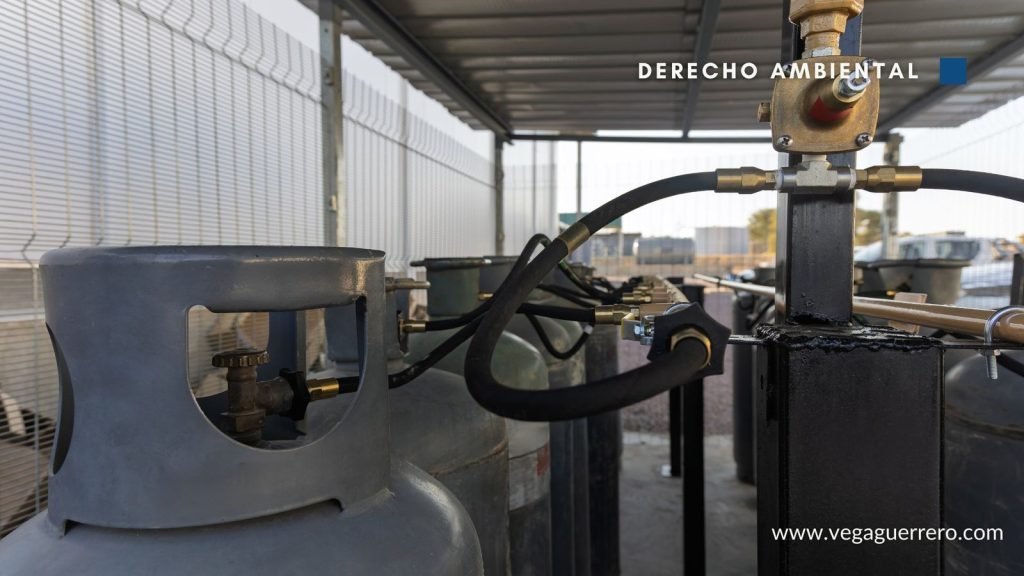
On October 2, 2026, the National Agency for Industrial Safety and Environmental Protection in the Hydrocarbons Sector (ASEA) published in the Official Gazette of the Federation (DOF) the Emergency Official Mexican Standard NOM-EM-008-ASEA-2026, “Transportation of Liquefied Petroleum Gas by Tank Truck and Semi-Trailer,” in the Official Gazette of the Federation (DOF) on October 2, 2026, establishing new technical specifications and requirements regarding industrial safety, operational safety, and environmental protection applicable to this activity.
The new regulation addresses the need to maintain an up-to-date regulatory framework to prevent and mitigate risks associated with the transportation of Liquefied Petroleum Gas (LPG), particularly those related to mechanical failures, container integrity, operating conditions, and personnel training.
Scope of the Regulation
NOM-EM-008-ASEA-2026 is generally applicable and mandatory throughout the national territory for regulated entities that transport LPG using tank trucks or semi-trailers, the latter in conjunction with their respective tractor-trailers.
Its provisions cover the stages of start-up, operation, and maintenance, as well as the end of operation for transport units, from the loading point to the unloading point of the product at regulated facilities.
Main Regulatory Obligations
The Standard establishes technical and documentary requirements that must be met to ensure the safety and integrity of transport units. Among the main obligations are:
- Mechanical integrity and condition of the units. Non-removable containers must have an identification plate, documentation certifying their design and manufacturing characteristics, as well as the fastening and safety elements specified in the Standard. Furthermore, requirements are established regarding the identification of units, emergency devices, safety equipment, and a speed limit of 80 km/h.
- Operation and maintenance. Regulated entities must carry out inspections, preventive and corrective maintenance, as well as tests to verify the mechanical integrity of containers, valves, fittings, and other components of transport units.
- Staff Training. The Standard establishes requirements for theoretical and practical training for operators, including aspects related to safe driving, vehicle inspection, and the coupling and uncoupling of tractor-trailers and semi-trailers.
- Conformity Assessment. The Standard provides for the issuance of certificates to verify compliance with applicable requirements, both for the start of operations and for ongoing operation and maintenance activities.
Transitional Provisions and Compliance Deadlines
NOM-EM-008-ASEA-2026 will take effect on October 6, 2026, and will remain in effect for six months, during which time the process of drafting the final Official Mexican Standard will continue.
For facilities already in operation, the Standard establishes relevant transitional provisions:
- Recognition of previous compliance reports. Compliance reports issued in accordance with NOM-EM-006-ASEA-2025 prior to the new Standard’s entry into force will be recognized by ASEA until their expiration.
- Obtaining the operation and maintenance report. Regulated entities whose units are in operation and do not have a valid report will have 90 calendar days, starting from the effective date, to obtain one.
- Hydrostatic tests. For non-removable vessels that are 50 years old or older, a deadline corresponding to the Standard’s effective period is established for conducting the applicable hydrostatic test. However, during that period, the test will not be required to obtain the operation and maintenance certificate for units in operation whose vessels are less than 50 years old.
- Inspection units. Inspection units with valid accreditation and approval to assess compliance with NOM-007-SESH-2010 may conduct compliance assessments under the new Standard during its period of validity.
Implications for Regulated Entities
The entry into force of this provision requires licensees and other regulated entities involved in the transportation of LPG to review the technical and documentary conditions of their units, as well as their maintenance, training, and conformity assessment programs.
In particular, it will be important to identify the units that need to obtain or update their operation and maintenance certification, verify the validity of previously issued certifications, and establish a compliance schedule that takes into account the transitional periods provided for in the Standard.
Furthermore, since this is an emergency regulation with limited validity, regulated entities should remain attentive to the development and eventual publication of the final Official Mexican Standard in order to promptly identify any adjustments that may result from its issuance.
At Vega, Guerrero, and Associates, we have a team specializing in environmental and regulatory law. If you have any questions regarding the scope of these provisions or their implications for your operations, please do not hesitate to contact us.