
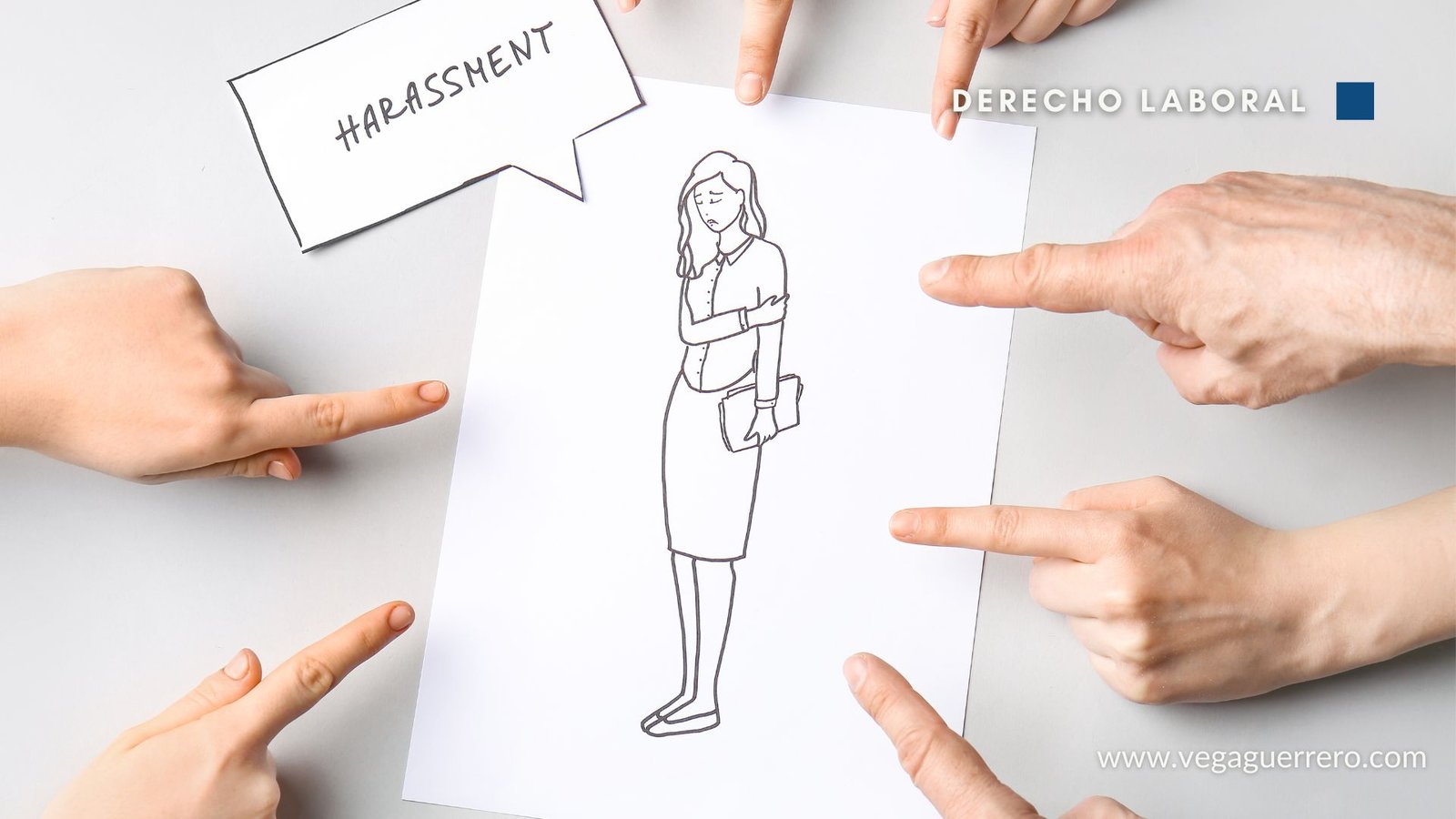

Addressing workplace harassment cannot wait until the affected person resigns or is fired. Two separate legal opinions published on September 25, 2026, in the Federal Judicial Weekly highlight an important recourse for companies: filing a claim in labor court to demand an end to the harassment, even if the employment relationship continues.
The criteria were issued by the First Collegiate Court for Civil and Labor Matters of the Seventeenth Circuit in its ruling on direct amparo case No. 715/2024. In addition to recognizing the validity of the labor remedy, the court states that when a female worker files a complaint regarding such conduct, the analysis must be conducted from a gender perspective and under a standard of enhanced due diligence.
The case arose from a lawsuit filed by an employee against her employer and several individuals. She sought an end to the workplace harassment she claimed to be suffering and the annulment of payroll deductions resulting from disciplinary actions related to that conduct.
The labor authority dismissed the claim because the benefits sought did not correspond to actions expressly provided for in the Federal Labor Law, such as dismissal, termination, or reinstatement.
The Collegiate Court held that this approach was incorrect. It explained that jurisdiction over labor disputes depends on the origin of the dispute, the facts, and the nature of the claim, and not solely on the name of the legal action. If the claims arise from the employment relationship, the absence of a legal action expressly titled “cessation of workplace harassment” does not justify denying access to justice.
For employers, the key point is that a complaint may seek to correct working conditions and stop violence without terminating the employment relationship. Under this criterion, the company’s defense must address both the justification for its decisions and the measures taken to prevent and address the reported conduct.
The second criterion incorporates a gender perspective. It requires identifying relationships of subordination, eliminating stereotypes, relaxing the standard of proof, and avoiding solutions that, in practice, result in the female worker being dismissed from her job. It also emphasizes stronger action by authorities and workplaces regarding gender issues.
This does not mean that every complaint automatically establishes harassment. The criteria pertain to the admissibility of the claim and the standard of review; the existence of the conduct and its consequences must be examined in the specific case.
Publication in *El Semanario* gives these criteria official recognition and allows them to be cited and invoked in other disputes. These are isolated rulings by a collegiate court: their publication does not make them binding case law nor does it constitute an amendment to the Federal Labor Law. Their relevance to businesses lies in their guidance value and in the arguments they may provide to support future claims. The Weekly publishes both binding and relevant rulings; therefore, mere publication in that medium does not determine whether they are binding.
Given this situation, we recommend that companies review the following practices:
- Have reporting channels in place that function throughout the employment relationship. Employees must be able to report misconduct without relying solely on their immediate supervisor, especially when that supervisor is involved. It is advisable to define who is responsible, response deadlines, and follow-up procedures.
- Conduct investigations in a timely and impartial manner. It is advisable to preserve emails, messages, evaluations, attendance records, and other relevant information; to listen to the people involved; and to document the findings. The investigation should take into account potential power imbalances and avoid dismissing a complaint based on stereotypes or assumptions about how the affected person should react.
- Review disciplinary actions, performance evaluations, and pay deductions. This case illustrates how disciplinary measures can form part of a harassment claim. Their legal and objective basis, their consistent application, and their temporal relationship to the complaint must be verified. A demerit note, on its own, is not sufficient to justify a pay cut.
- Take protective measures without harming the person filing the complaint. Changes in position, schedule, or workplace require special care if they reduce income, affect opportunities, or shift the consequences of the problem onto the person who reported it. The measures must prevent the conduct from continuing, avoid retaliation, and respect the rights of the people involved.
- Review protocols and train those in leadership roles. The Federal Labor Law already provides for the implementation, in agreement with workers, of a protocol to prevent gender-based discrimination and address cases of violence and sexual harassment. It is important to ensure that internal mechanisms also allow for the effective handling of complaints of workplace harassment and to distinguish between legitimate management practices and humiliating or intimidating behavior.
These criteria make the company’s response particularly important while the employment relationship remains in effect. A written protocol must be translated into timely investigations, well-reasoned decisions, and follow-up to prevent such conduct from recurring.
At Vega Guerrero, we advise companies on reviewing their protocols, handling complaints, and conducting internal investigations to prevent contingencies and ensure a violence-free work environment.
Reference: Individual theses XVII.1o.C.T.1 L (12a.) and XVII.1o.C.T.2 L (12a.), digital records 2032686 and 2032687, respectively. Both stem from direct appeal 715/2024, decided on March 6, 2026, and were published on September 25, 2026.